Author: Justin Weinberg
-
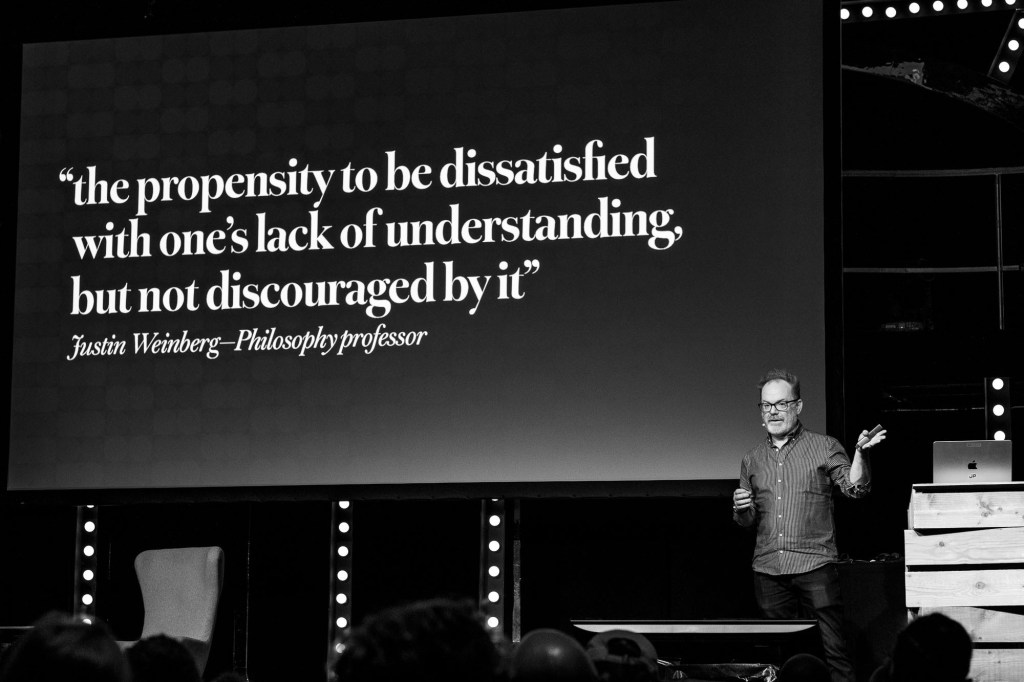
CURIOSITY AND OTHER Virtues
At Beyond Tellerand in Berlin, an event “where creativity and technology meet,” one of the featured speakers gave an interesting-sounding talk called “Curious Findings.”
-
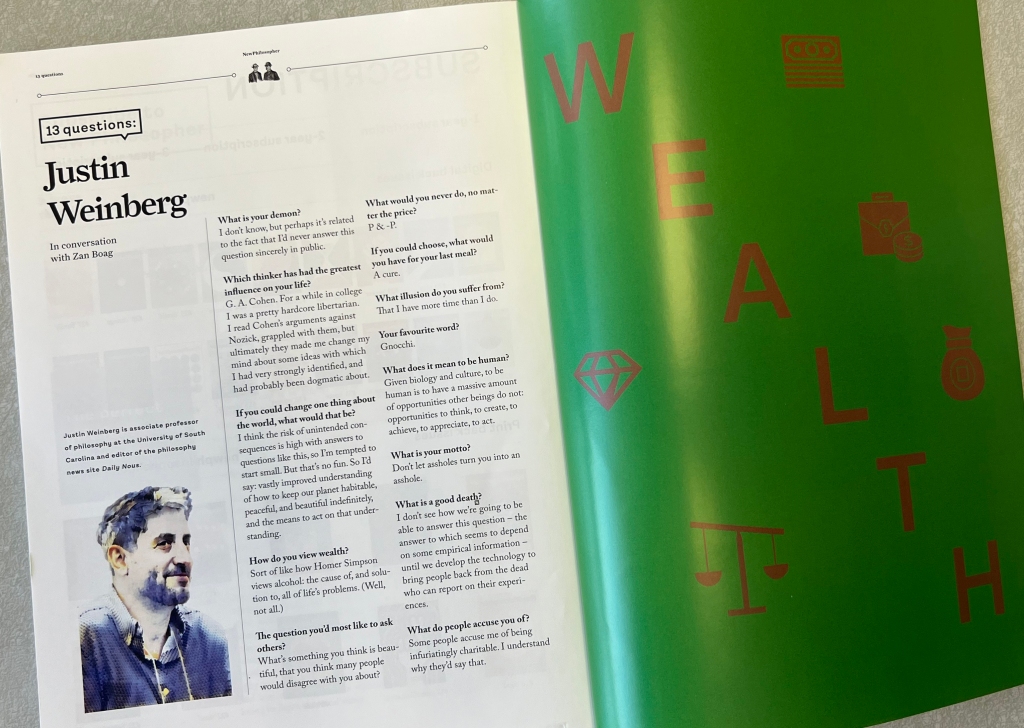
Interview at New Philosopher
The Australian-based philosophy magazine, New Philosopher, has a fun and quick interview feature called “13 Questions” and in the latest issue, I’m the one answering them. An abridged version is in the hard copy, and an unabridged version is here.
-

The Demand for Philosophers
Last week I was part of a panel on “The State of Philosophy: Challenges, Threats, and Strategies” at the Eastern Division Meeting of the American Philosophical Association (APA). I talked about the demand for people with philosophy PhDs in the U.S. and strategies for maintaining or improving it. This post is about the session and what I…
-
The AI Threat, the Humanities, & Self-Cultivation
When I’ve spoken with colleagues about the worry that many students will cheat on assignments by using ChatGPT or other large language models (LLMs), we invariably bounce between three approaches to the problem: “defense”, “offense”, and what I’ll call “no-fence” “Defense” involves devising assignments and assessments we hope might be, to varying degrees, LLM-resistant. “Offense”…
-

Certainly Absurd
…If structuring aspects of our lives around beliefs that could be mistaken and then actually being mistaken about them is what makes a life (more) absurd, then it is not clear that being mistaken about the emotional and cognitive abilities or AIs or their moral status will lead to more lives that are absurd, or…
-
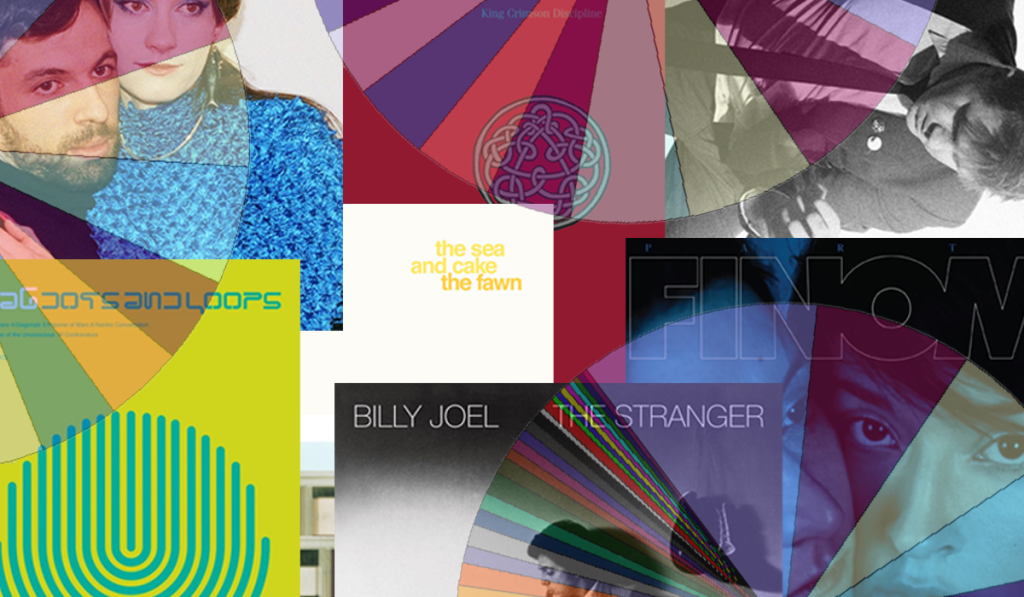
Are You a Fan of More Bands Than You Think?
What’s the minimum percentage of a musician’s recordings you must really like to identify as a fan of that musician? (Let’s say you “really like” a piece of music if you ever desire to hear it because you like it—not just that you’d be okay with hearing it if it happened to be playing.) When…
-
The Moral Dimensions of Academic Philosophy
“Courting controversy is instrumentally valuable towards the production of knowledge and other goods philosophy might bring about, but other things are valuable, too… So while I want to say, ‘yes, go for controversy,’ and ‘yes, have institutions protect the academic freedom and ability of philosophers to discuss controversial matters,’… there are ways to do this…
-

Philosophers on the Internet
I had a great time earlier this month discussing philosophy and philosophers on the internet with Leigh Johnson, Richard Lee, and Charles Peterson on their podcast, Hotel Bar Sessions (Spotify, Apple Podcasts, Audible, and everywhere else). This team knows how to put together a well-produced show and structure a group conversation that makes for a good listen, and I think a…
-
Grandstanding: What Kind of Problem Is It?
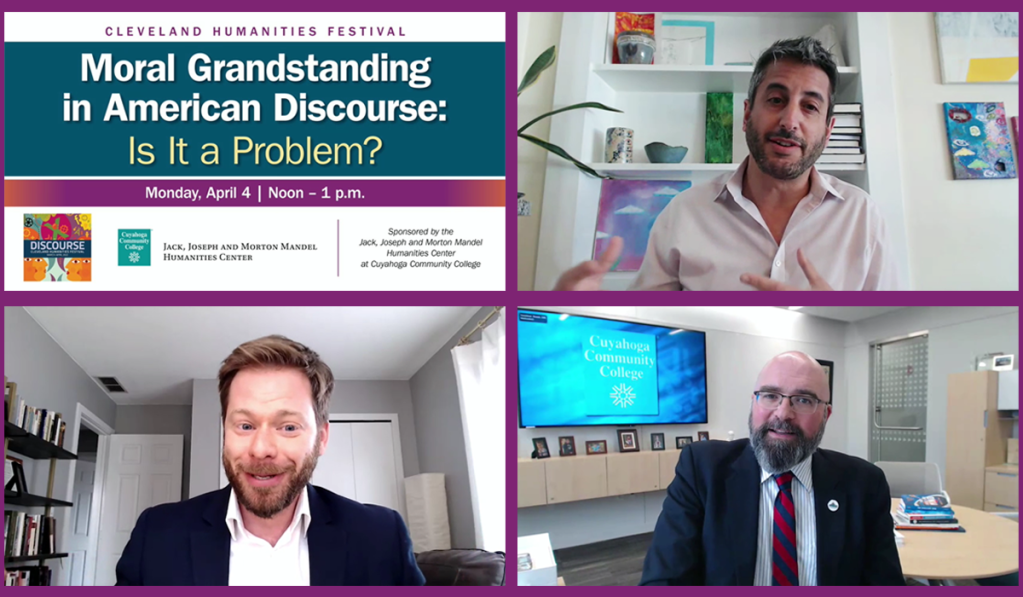
The Cleveland Humanities Festival is focused on the topic of public discourse and for one of its sessions brought on Brandon Warmke, a philosopher at Bowling Green State University, and me, to discuss “moral grandstanding.” Warmke is the co-author (with Justin Tosi) of the book, Grandstanding: The Use and Abuse of Moral Talk. Grandstanding, as…
-

What is this AI Bot’s Moral Philosophy?
Delphi is an AI ethics bot, or, as its creators put it, “a research prototype designed to model people’s moral judgments on a variety of everyday situations.” Visitors can ask Delphi moral questions, and Delphi will provide you with answers.
-
Expert Moral Advice: A Dialogue
Moral philosophers sometimes take it to be within the domain of their expertise to tell other people what, morally, they should do. But is moral advice something that moral philosophers are experts in? In a recent presentation, I argued that there are several reasons for thinking that being an expert in moral philosophy does not…
-

Philosophers as public intellectuals
When engaging in “public philosophy,” is the job of the philosopher to metaphorically lead the people out of Plato’s cave? That’s the idea that Giannis Vassilopoulos entertains in introducing a roundtable discussion that Agnes Callard, Anastasia Berg, and I were invited to take part in at the 4th Panhellenic Undergraduate Philosophy Conference. I began by…
-
Enemies with Benefits Mini-Talk
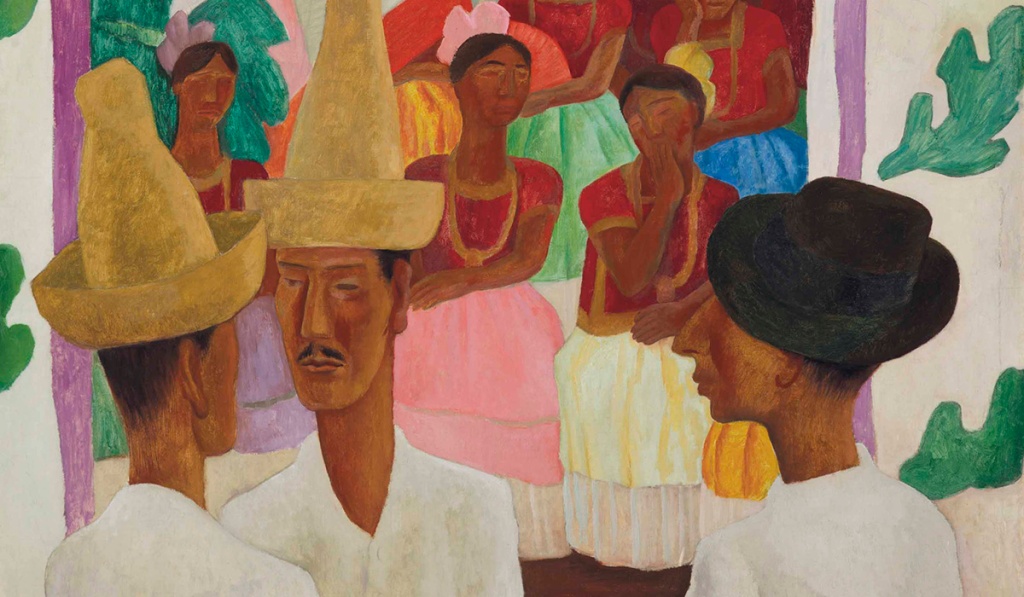
“Rival Benefit” is the phenomenon by which different parties make each other better off in virtue of a disagreement between them. It’s named after Diego Rivera’s painting, “The Rivals” (1931), whose history happens to exemplify it.
-

Complementing Defenses of Academic Freedom with Understanding & Advice
Shoring up the defenses of academic freedom with organizations that aim to level the playing field between threatened faculty and their employers is a good idea…That said, it seems that something is missing from these efforts.
-

Value of Philosophy at Brain in a Vat
Brain in a Vat is a philosophy podcast and video channel hosted by Jason Werbeloff and Mark Oppenheimer. They recently invited me on to talk about the value of philosophy…
-

Nozick’s Cavemen
Sometimes I come across a piece of writing and think to myself: “This. If I could just get enough people to read this.” The thought is usally followed by imagining a kind of widespread epiphany that improves something, be it a social or political issue, a way of thinking, quality of life, etc.
-
Discussing Disagreement at The Stoa
“The success of a disagreement is not its resolution.” That was part of my answer to one of the questions I was asked during my guest appearance at The Stoa last week.
-

Wishing for Harm
Philosophers lately have been writing about what is the proper reaction to Donald Trump’s COVID-19 diagnosis. Mostly, they have taken to writing how it is wrong to wish that the course of his illness goes badly for him. This is a mistake, for a couple of reasons.
-

Demographic Diversity is Good for Philosophy
One reason demographic diversity (in race, ethnicity, gender, socioeconomic status, sexual orientation, etc.) is good for philosophy is that it provides new constituencies needed to foster the growth of philosophy–or so I argue here.
-
On the Comedy Cellar’s Podcast
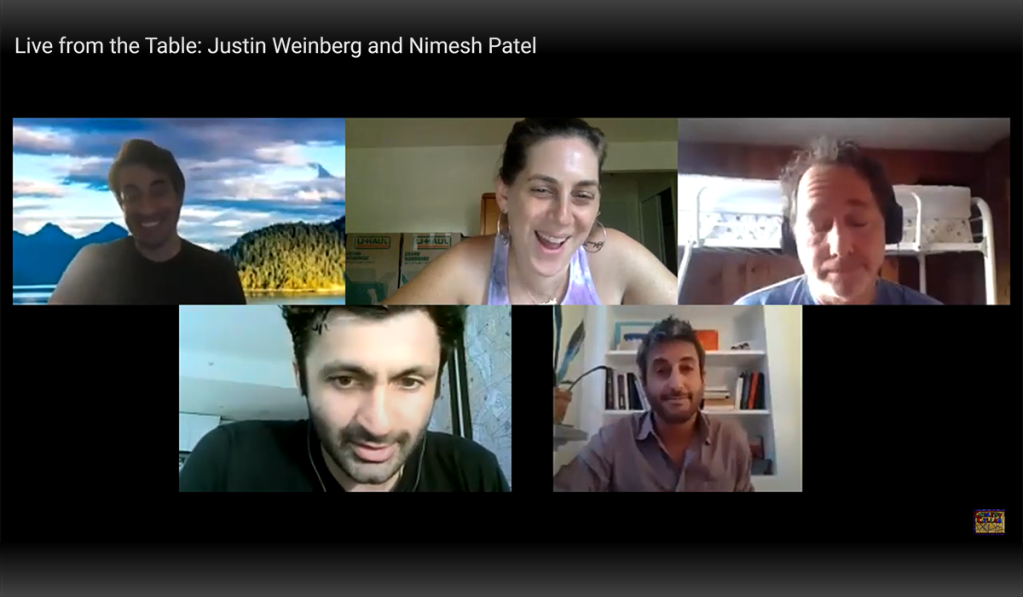
The famous Comedy Cellar in New York has a podcast called “Live from the Table“, in which the club’s owner, Noam Dworman, comedian Dan Naturman, and producer and writer Periel Aschenbrand converse with stand-up comics and a wide range of other folks, and recently I was one of those other folks.
-
Where Are Today’s Great Philosophers?
I sometimes hear the question, “where are today’s great philosophers?” posed as a critique of contemporary philosophy. Yet of the explanations for the belief that “compared to the past, philosophy today lacks great thinkers,” the most plausible possibilities are compatible with philosophy being in better shape than ever.
-

What Does Self-Censorship Data Show?
In a recent essay, James L. Gibson and Joseph L. Sutherland summarize public opinion research over the past 66 years on responses to the question “Do you or don’t you feel as free to speak your mind as you used to?” They conclude, “Americans are much more likely to self-censor today than in the past.”…
-

Illusion and Agreement in the Debate over Intolerance
Society is not growing more intolerant. Why do so many people think it is? In this post I consider a few explanations having to do with increased social equality, cognitive biases, and current communications technology.
-

Welcome to Disagree
I’m Justin Weinberg, and Disagree is my place online for occasional and brief thoughts on philosophy, life, and culture, and for sharing various things I find interesting. The name for the site—“Disagree”—is the name of a project I’m working on about conflict, difference, and disagreement. Conflict, though it may sometimes have bad effects, is good…
 justin weinberg